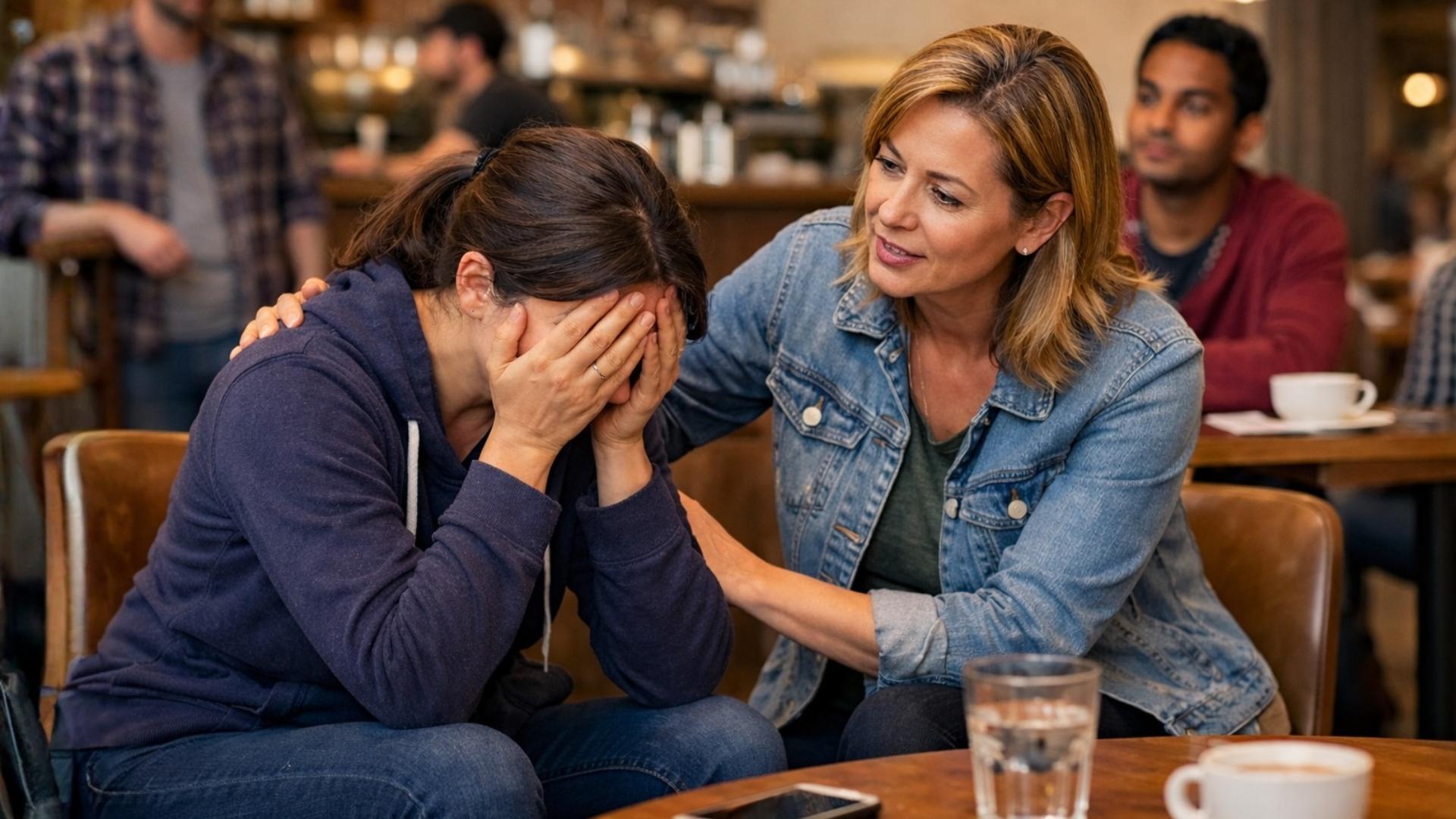
Everyone around you seems ready to celebrate. And you’re just trying to get through the day.
When you’ve lost someone you love, the holidays can feel impossibly hard. The empty chair at the table. The tradition you can’t continue. The constant reminders that someone is missing. If this is where you are right now, you’re not alone. And there’s no wrong way to handle it.
Grief doesn’t care about the calendar. It shows up when it wants to, often when you least expect it. You might be doing okay, and then a song plays or someone mentions your loved one’s name, and suddenly you’re struggling to breathe. The holidays make this worse because everything around you is designed to celebrate togetherness. When you’re missing someone, that hurts in ways most people can’t understand unless they’ve lived it.
The first holiday season without your person is often the hardest. Even if they died months ago, this is the first time you’re facing all these traditions, all these memories, all these family gatherings without them. It’s exhausting and heartbreaking in ways you probably didn’t anticipate. You knew it would be hard, but you didn’t know it would be this hard.
Your feelings are going to be all over the place, and that’s normal. Sadness one minute, anger the next. Sometimes surprisingly okay, then falling apart without warning. You might laugh at something funny, then feel guilty for having a good moment. That guilt doesn’t serve you. Your loved one wouldn’t want you to stop living. Feeling joy doesn’t mean you’ve forgotten them. Grief and happiness can exist at the same time. Your heart is big enough for both.
Some days you might feel numb. Other days, the pain might be so intense you can barely function. You might cry in the grocery store when you see their favourite food. You might have to leave a gathering early because it’s just too much. You might surprise yourself by actually enjoying a moment. None of this means you’re doing grief wrong. There is no wrong way.
One of the hardest parts of the holidays when you’re grieving is not knowing what to expect from yourself. Making a loose plan can help. Think about which gatherings feel manageable and which ones don’t. Consider how long you can realistically stay before you need to leave. Figure out what your exit strategy looks like if things get overwhelming. Identify who you can call if you need support. Think about whether you need to line up a safe person to check in with during events.
You’re allowed to change your mind.
If you commit to something and realize halfway through that you need to leave, do it. If you planned to skip everything but wake up wanting connection, that works too. Some people find it helpful to have a backup plan ready. Plan A might be attending the family dinner, but Plan B is leaving after an hour to spend quiet time at home. Just knowing you have an out can make Plan A feel more doable.
Some people find comfort in including their loved one in holiday celebrations. Light a candle in their memory during dinner. Make their favourite recipe and tell stories about them while you cook. Share a funny memory about them during the gathering. Set a place at the table with their photo or a meaningful object. Have family members write notes about what they miss or remember, and read them together. Play music they loved. You don’t have to do any of this. But for many people, finding ways to acknowledge the absence makes it feel less painful than pretending everything is normal. It gives everyone permission to talk about the person who died, which can actually bring comfort.
Grief has a way of ambushing you when you least expect it. During the holidays, common triggers include hearing their favourite song unexpectedly in a store, someone asking “how many kids do you have?” when one has died, seeing their name in your phone contacts, family members laughing about old memories that now sting, the moment you reach for your phone to call them then remember, and social media posts showing everyone else’s “perfect” holidays.
If you can, try to identify your triggers ahead of time. That way, when they hit, you’re not completely blind-sided. You can have a plan for what you’ll do: step outside, call a friend, take some deep breaths, or just let yourself cry. Sometimes just knowing what might set you off makes it slightly easier to handle when it happens.
You don’t owe anyone a “perfect” holiday. If someone expects you to host when you’re barely holding it together, say no. If a family gathering feels like too much, skip it. If you need to leave early, leave early. If someone asks you to “just try to enjoy yourself” or “be festive for the kids,” you can set a boundary. The people who love you will understand. And the ones who don’t? That’s their problem, not yours. You’re in survival mode right now, and survival counts as success.
Sometimes the old ways of celebrating are too painful to continue. That’s when it might be time to try something different. Instead of a big family dinner, take a quiet walk in nature. Volunteer somewhere your loved one cared about. Travel somewhere new to avoid all the memories. Order takeout instead of cooking their signature dish. Watch movies all day in your pajamas. Creating new traditions doesn’t erase the old ones or dishonour your loved one. It’s just acknowledging that life has changed, and you’re doing your best to adapt. Eventually, these new traditions might become meaningful in their own right.
When you’re grieving, basic self-care becomes even more important and somehow even harder to do. Try to get enough sleep—grief is exhausting, and you might need more rest than usual. Eat regular meals even when you don’t feel hungry, because your body needs fuel. Move your body; a walk can help more than you’d think, even just around the block. Limit alcohol; it might numb the pain temporarily but makes everything worse later. Take breaks from social media if everyone’s picture-perfect holiday posts are making you feel worse. Ask for help with tasks that feel overwhelming. You’re not being selfish by taking care of yourself. You’re surviving.
One of the loneliest parts of grief is feeling like you have to carry it alone. You don’t. Talk to someone you trust about how you’re really doing. Not the “I’m fine” version you give to acquaintances. The real version. The one where you admit you’re struggling. The one where you say their name out loud and cry if you need to.
If you don’t have someone in your life you can be that honest with, talking to a therapist can help. Sometimes being around others who truly understand, not just sympathize, makes all the difference. When you’re in a room with people who have also lost someone they love, you don’t have to explain why the holidays hurt. They just get it.
The first holiday season after a loss is usually the hardest. The second one is still tough. Eventually, it becomes less about surviving and more about remembering. The grief doesn’t disappear. You don’t “get over” losing someone you love. But it does change. It becomes something you carry with you rather than something that’s crushing you.
You’ll find your own rhythm. You’ll figure out which traditions to keep and which ones to let go. You’ll learn your triggers and your coping strategies. You’ll discover that you can hold grief and joy at the same time. It won’t happen overnight. It won’t follow a timeline. But gradually, the weight shifts.
If you’re struggling with grief this holiday season, support is available. At Cornerstone, our therapists understand that grief affects every part of your life. We can help you work through the pain, develop coping strategies that actually work for you, and find ways to honour your loved one while still moving forward.
You Don’t Have To Do This Alone.
If you’re looking for connection with others who truly understand what it’s like to lose someone you love, our 8-week grief support group starts in March 2026. Led by Nesrine Riskalla, Registered Psychotherapist (Qualifying), this group creates a space where you won’t be judged or rushed. You’ll meet others walking this same painful road, share your story if you want to, and learn ways to carry your grief without being crushed by it. Learn more about the grief support group
The holidays are hard when you’re grieving. Some moments will knock the wind out of you. But you’ll get through them, one day at a time, one moment at a time. And we’re here to help.
Ready to start your healing journey? We’re here to help.
Call us at 905.214.7363 or email [email protected].