Cornerstone offers evidence-based, trauma-informed therapy approaches for individuals, couples, and families in Mississauga and across Ontario. We do not believe in one-size-fits-all care. Instead, we match each person with an approach that fits their goals, values, and needs.
Our work is grounded in clinical training and experience. Every therapist at Cornerstone holds a master’s degree and is registered with the College of Registered Psychotherapists of Ontario (CRPO). Our Clinical Director, Father Pishoy Wasfy, holds both a PhD and a Doctor of Counselling and Psychotherapy, and provides clinical supervision across the team.
We offer therapy in English, French, and Arabic, in person in Mississauga and online across Ontario. For more than 15 years, we have served the Peel Region community with care that is thoughtful, culturally responsive, and rooted in evidence-based practice.
Helps you notice the link between your thoughts, feelings, and actions and gives you tools to shift unhelpful patterns, especially for anxiety, low mood, and stress.
Teaches practical skills for managing intense emotions, tolerating distress without making things worse, improving relationships, and staying grounded in the present. Originally developed for borderline personality disorder, DBT is now used for a wide range of concerns where emotional regulation is central.
Uses guided eye movements or gentle left-right tapping while you briefly recall a difficult memory. This helps your brain re-file the memory so it feels less intense and less disruptive day-to-day. EMDR is particularly effective for PTSD and trauma.
Helps you stop fighting your thoughts and feelings and instead live more by your values, even when life is hard. Works well when anxiety, depression, or chronic stress has become the focus of daily life.
Helps couples and families understand what is happening beneath repeated arguments so they can feel closer and safer with each other again. Research-supported for rebuilding connection and lasting change.
Works with the stories you carry about yourself and your life. Helps you separate from the ones that have been defining you and reconnect with your own strengths and values. Especially useful for identity, cultural transitions, and trauma.
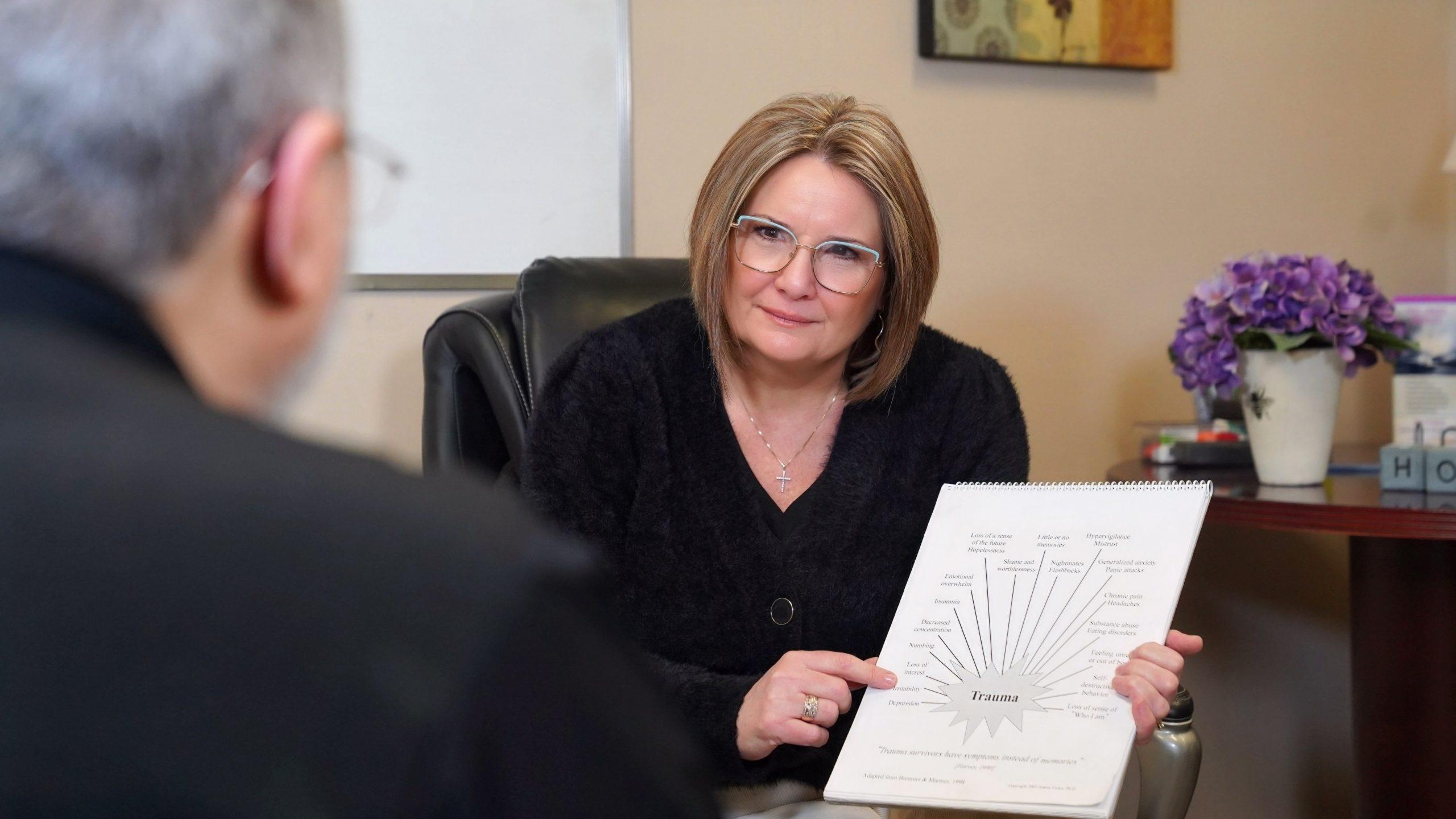
Not a single technique but a way of working. Safety, choice, and pacing come first. No trauma processing begins until a solid sense of safety is established. Appropriate for anyone with a trauma history.
Explores how your earliest relationships shaped the way you connect with others today. Helps you understand your patterns and build more secure connections, whether in relationships, parenting, or within yourself.
Optional integration of Christian faith with therapy. Your therapist will not push faith into sessions, but if you choose to bring your beliefs in, they know how to work with them as a real resource.
Views the family as a connected system where each person's behaviour affects everyone else. Focuses on patterns and roles rather than blame. Useful for recurring family conflict, blended family dynamics, and intergenerational patterns.
Teaches you to notice your thoughts and feelings without being pulled around by them. Helpful for anxiety, burnout, reducing the chance that depression returns, and chronic pain.
Focuses on what you want instead of what is wrong, and on what is already working in your life. Goal-oriented and often shorter than other approaches. Good for specific, defined challenges.
We shape our care around your story, your values, and your lived experience. Culture, faith, family, immigration, and language all influence how people understand stress, healing, and support. We take those differences seriously, because effective therapy has to reflect the whole person.
We offer sessions in English, French, and Arabic to make support more accessible. Our team has experience working with newcomer families and multicultural communities across Peel Region, and we understand the real-life pressures that can come with building a life in a new country.
Call 905-214-7363 or fill out the form.
Most people are not sure where to start, and that is completely okay. You do not need to choose a therapy approach on your own. When you contact us, our Intake Team will ask a few questions about what you are looking for and connect you with a therapist who is a good fit.
In your first session, you and your therapist will talk about what you hope to work on and which approaches may be most helpful. You do not need to know the “right” method before you begin. Part of your therapist’s role is to help guide that process and adjust as needed along the way.