

Narrative therapy starts from a simple idea: you are more than the hardest things that have happened to you. The stories you carry about yourself, and the stories others have placed on you, can shape how you feel, what you expect from life, and how you relate to others.
Over time, painful experiences, labels, or messages from family, culture, or systems can turn into a “single story” about who you are—for example, “I am a failure,” “I am too much,” or “I do not belong.” Narrative therapy helps you look at where those stories came from, and ask whether they are the full truth. Often, they are only one part of a much larger, richer story.
In therapy, you and your counsellor work together to notice the problem story, separate it from your identity, and reconnect with a fuller, more accurate account of your life—one that includes your strengths, values, and hopes.
We make sense of our lives through stories. The way we talk about ourselves—and the way others have talked about us—can influence our mood, confidence, and choices.
When someone describes themselves as “broken” or “never good enough,” narrative therapy gently asks:
Who first told this story?
What experiences fed it?
Is it the only story that fits your life?
Most people discover that the problem-saturated story they carry is not the complete picture. It is one story that has taken up too much space. Narrative therapy helps you notice other stories that have been overshadowed: times you showed courage, care, creativity, or faith, even in hard circumstances.
Externalising the problem
Instead of seeing yourself as the problem, you and your therapist begin to see the problem as something outside you. For example, “Depression has been affecting my life” or “Anxiety has been pushing me around” can feel different than “I am the problem.” This shift makes it easier to work with what is happening without attacking your identity.
Finding unique outcomes
You look for times when the problem story was not in charge—for instance, moments when you spoke up, showed kindness, or stayed connected, even when anxiety or shame were present. These “unique outcomes” become evidence of a wider, more hopeful story about who you are.
Re-authoring
Together, you develop alternative stories that fit your actual experience and values. This might include naming what has helped you survive, what matters most to you, and how you want to live going forward. Over time, these preferred stories can become stronger than the old, limiting ones.
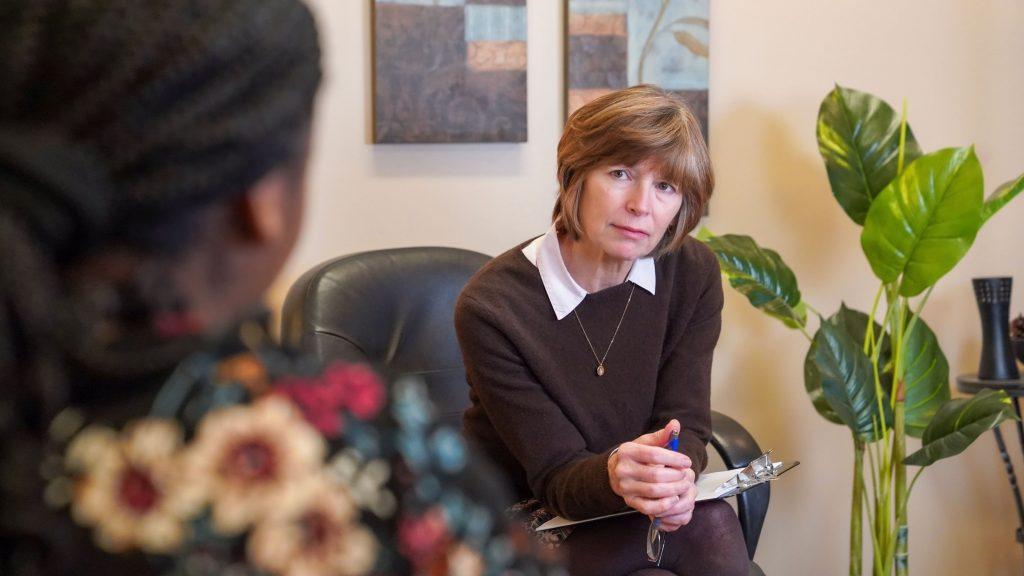

Narrative therapy is used both as a standalone approach and woven into other therapeutic work at Cornerstone. Because our roots are in multicultural and faith-informed care, narrative therapy is a natural fit. Many clients are navigating multiple stories at once: the story inherited from family, the story shaped by their culture or faith community, and the story they are building in Canada.
For some clients, it is part of healing from trauma and post-traumatic stress disorder (PTSD), helping them name how trauma has influenced their story and build a more hopeful, truthful narrative over time. You can also read our blog post about how we approach trauma and PTSD.
Therapy can be a place to honour each of these stories, gently question the ones that have caused harm, and strengthen the ones that reflect your values, dignity, and hopes.
Every therapist holds a master’s degree and is CRPO-registered. Sessions are available in English, French, and Arabic, in person in Mississauga and online across Ontario.
Call (905) 214-7363
Email [email protected], or fill out the form below.
Send us a message and we will get back to you within one business day.