Quick overview: Anxiety looks different depending on your background, your role, and what is going on in your life right now. This piece walks through what anxiety actually is, why the signs of anxiety are easy to miss, and how it can show up for newcomers, men, women, teens, and people under work pressure, plus where counselling fits in. If your time is short, jump to the heading that fits you. If you read the whole thing, you may recognize someone else in your life too.
You might picture anxiety as someone visibly panicking. Most of the time, it looks nothing like that. It looks like a friend who cancels plans again and calls it being busy. It looks like a coworker who checks their email forty times before nine in the morning. It looks like you, lying awake replaying a conversation from three years ago. A lot of people carry anxiety for years before they ever have a word for it.
For newcomers to Canada, anxiety often connects to the stress of building a new life: new paperwork, a new language, and rules nobody explained. For men, it can show up as a short temper or an inability to sit still. For women, it can look like holding everything together on the outside while feeling one step from dropping something important. For teens, it can look like going quiet, avoiding friends, or grades that drop suddenly. And for almost anyone, something as small as a phone call or a work meeting can set it off.
This article covers what anxiety actually is, how it shows up differently across ages and life stages, why it so often gets missed, and how counselling can help. If you only need one section right now, start there and come back to the rest another time.
What is anxiety
Anxiety is the body’s alarm system. It is meant to warn you about danger and help you react quickly, sending stress hormones through your body so you can fight, run, or freeze. That response kept people alive for most of human history, and it still helps today. A bit of nervous energy before a job interview or a big test can actually sharpen your focus.
The problem starts when the alarm goes off too often, too intensely, or when there is no real danger at all. Instead of switching off once the moment passes, it stays on. Instead of matching the size of the actual problem, it takes over everything. That shift, from an alarm that responds to real threats to one that fires all the time, is usually what separates ordinary worry from an anxiety disorder that could use professional support.
Anxiety usually shows up in four different ways at the same time, even when only one of them feels obvious:
- Physically: racing heart, tight chest, upset stomach, muscle tension, fatigue.
- Mentally: racing thoughts, trouble concentrating, a mind that jumps to worst-case scenarios.
- Emotionally: a constant low hum of dread, irritability, or feeling on edge.
- Behaviourally: avoiding things, checking things repeatedly, or needing constant reassurance.
Anxiety and stress often get treated as the same thing, but they are different. Stress usually has a clear cause, like a deadline or a hard conversation, and it eases once that cause is dealt with. Anxiety can outlast its trigger, or show up with no clear trigger at all. Burnout is different again. It builds after stress goes on too long without a break, and it adds exhaustion and a sense of checking out from work or life, something anxiety on its own does not always bring.
These three overlap more than they stay separate. Long-term stress can turn into anxiety. Anxiety left unaddressed can wear a person down toward burnout. Most people who reach out for support are dealing with some mix of all three, not just one in isolation. If ongoing stress and exhaustion feel like the bigger part of your story, our article on stress and burnout may be a better place to start.
For some people, anxiety is rooted in trauma or a difficult past, not something happening right now. If certain reminders make your body react strongly, even years later, it helps to tell a therapist about that directly. It changes the kind of support that works best for you.
Common signs of anxiety people miss
Most people do not walk into a doctor’s office and say, “I think I have anxiety.” They say they cannot sleep, or they cannot stop worrying about work, or their stomach hurts for no reason. Anxiety often disguises itself as a personality trait, or just a string of bad days.
Overthinking, going over the same thoughts again and again without landing anywhere, is one of the clearest signs. So is perfectionism: feeling like nothing you do is ever quite good enough. Trouble concentrating and replaying a conversation long after it ended are common too. The body often speaks up as well, with stomach problems, a tight chest, headaches, restlessness, or trouble falling and staying asleep.
For some people, anxiety arrives suddenly, as a panic attack: a racing heart, shortness of breath, dizziness, and a wave of fear that feels like something is seriously wrong, even when nothing dangerous is actually happening.
Anxiety also affects how people treat those closest to them. It can look like asking a partner the same question five different ways, just to hear the same reassurance again. It can look like snapping at your kids over something small, or going quiet and pulling away from people who care about you. These reactions come from a body stuck in alert mode, reacting as if there is danger even when there is none.
All of this can look a little different depending on who you are. Here is how it often shows up in a few common situations.
How anxiety can show up in newcomers
Settlement brings its own kind of pressure. Housing, work, a new language, and paperwork can all land at once, and that pressure does not always fade once the first year is over. Some people still feel it five or ten years after arriving, long after everyone around them assumes they have settled in.
Cultural or religious ideas about strength can make it harder to name what is happening, so people write it off as “just part of moving,” even years later. It is still real. Care that understands your background, and that comes in your own language, often makes the biggest difference here.
How anxiety can show up in men
Anxiety in men does not always look like worry. It can look like a short temper, working long hours instead of sitting still, going quiet, or headaches and stomach trouble instead of tears. Many men do not call it anxiety right away, because it does not match the version of strength they were taught.
Recognizing anxiety is not about becoming a different kind of person. It is about understanding what your body has been doing for a long time.
How anxiety can show up in women
For many women, anxiety shows up as an invisible mental load: tracking everyone’s schedule, everyone’s needs, and everyone’s feelings, on top of your own job and responsibilities. You can look completely fine on the outside, while quietly feeling like one more thing would be too much to handle.
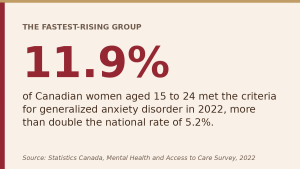
Perfectionism and people-pleasing often travel with this kind of anxiety, and over time this pattern can lead straight into burnout.
Anxiety in teens
For teens, anxiety often shows up around school, friendships, and the pressure to figure out who they are while everyone seems to be watching. It can look like pulling away, snapping at family, grades that drop suddenly, or refusing to go to school. Shutting down can look like laziness or defiance, when it is usually a young person who feels overwhelmed.
If you are a parent reading this, you do not need to have the perfect thing to say.
Social anxiety and fear of judgment
Social anxiety is more than shyness. It is an intense fear of being watched, judged, embarrassed, or rejected, and it can attach itself to situations that seem small from the outside: making a phone call, eating in front of others, speaking up in a meeting, or walking into a room where people already know each other.
This kind of anxiety touches students, newcomers, professionals, and parents alike. Someone might turn down a promotion because it involves public presentations, or skip a family gathering because the thought of small talk feels exhausting before it has even started. From the outside, it can look like someone being distant or uninterested. From the inside, it is often the opposite: caring so much about how you come across that it becomes hard to be present at all.
If this sounds familiar, our video resources page includes a short video that explains how social anxiety differs from simply being introverted, and how therapy helps people build real confidence in these situations over time.
Workplace anxiety: when stress at work starts to feel like too much
Work stress is common. Anxiety is what happens when that stress stops staying at work. You might dread opening your inbox before you have even opened it. You might replay a meeting for hours afterward, certain you said the wrong thing. You might notice tension in your shoulders long after you have logged off for the day.
Workplace anxiety and burnout feed each other. Long hours, unclear expectations, or a difficult manager can create anxiety, and that anxiety can make it harder to recover between workdays, which pushes you closer to burnout. If workplace stress and exhaustion are the bigger part of what you are feeling, our stress and burnout resource walks through practical ways to interrupt that cycle.
Why anxiety often gets missed
Anxiety is good at hiding. It can look like stress, perfectionism, anger, or procrastination. Sometimes it looks like simply being “the capable one” everyone relies on. These patterns can seem productive from the outside, so people live with them for years without realizing how much room anxiety has taken up in their life.
One of the clearest signs that anxiety has become a bigger problem is not just feeling worried. It is when you start changing your life to avoid discomfort. That might mean skipping calls, turning down invitations, not applying for a job you actually want, missing school, or quietly saying no to opportunities that used to excite you. Anxiety does not always feel loud. Sometimes it just makes your world a little smaller, one avoided thing at a time.
When to seek support
Consider reaching out for support if you notice several of these together, especially if they have lasted more than a few weeks:
- Sleep that stays disrupted, even when you are exhausted
- Constant tension or a body that will not relax
- Panic symptoms that come on suddenly
- Avoiding more and more situations, people, or responsibilities
- Strain in your relationships that keeps building
- Trouble functioning at work, school, or at home
If anxiety ever includes thoughts of self-harm, or if you feel unable to function or keep yourself safe, that calls for support right away. In Canada, you can call or text 9-8-8, the Suicide Crisis Helpline, any time of day, for free and confidential support in English or French. If there is immediate danger, call 911 or go to your nearest emergency department.
[IMAGE: stat_unmet_need.png — suggested placement: after the “Why anxiety often gets missed” or “When to seek support” section]
How counselling can help
Therapy for anxiety is not about eliminating every worry. It is about understanding what is driving yours, and building skills that hold up over time.
Counselling gives you a place to talk with someone who understands, without judgment. You and your therapist work out what might be feeding your anxiety, whether that is stress, a past experience, or something happening in your life right now. From there, you build an approach that works with what you already do well, not a generic checklist. It does not stop at the first session either. Your therapist stays with you as you go, at whatever pace works for you.
At Cornerstone, that might mean settlement stress, family pressure, or something else entirely; the approach adjusts to fit. Common methods include cognitive behavioural therapy (CBT), which helps you notice and shift unhelpful thought patterns; mindfulness-based strategies, which help you slow down and respond instead of react; and acceptance and commitment therapy (ACT), which helps you make room for difficult feelings without letting them steer your decisions. Where trauma is part of the picture, EMDR (eye movement desensitization and reprocessing) can help the nervous system process what happened so old triggers lose some of their intensity.
You might also find it helpful to give your anxiety a name, like Betty or Ahmed. It can feel a little strange at first, and that is normal. Naming it makes it easier to talk about anxiety as something separate from yourself, rather than a part of who you are. Instead of saying “I am so anxious,” you might say, “Betty is telling me to cancel this again.” That small shift creates a bit of distance. It becomes easier to notice what anxiety is doing, and choose a different response.
A few things help, no matter which approach fits you best:
- Grounding techniques to bring your body out of alarm mode in the moment
- Noticing triggers so patterns become visible instead of automatic
- Reducing avoidance gradually, rather than all at once
- Sleep and routine support, since a tired body has a harder time managing anxiety
- Counselling, to build a plan that fits your specific life
- Knowing when to seek urgent help, and having a plan for that moment before you need it
Every therapist on our team holds a master’s degree and is registered with the College of Registered Psychotherapists of Ontario, the licensing body for psychotherapists in the province. A Doctor of Counselling and Psychotherapy oversees the clinical work. Sessions run in English, French, and Arabic, in person in Mississauga or online anywhere in Ontario. If you want to learn more about anxiety, our anxiety therapy in Mississauga page walks through it.
If you want it, we also offer optional Christian faith integration. It is one option among several, not a requirement. Either way, the evidence-based core of the therapy stays the same.
Taking the next step
If anxiety is affecting your sleep, your relationships, your confidence, or your ability to get through an ordinary day, counselling can help. You do not need to have it all figured out before you reach out. That is what the first conversation is for.
Reaching out is a reasonable next step, not a last resort. Call us at 905-214-7363, email us or send a message through our website, and we will take it from there.
Sources
- Statistics Canada. (2023). Mental disorders in Canada, 2022. https://www150.statcan.gc.ca/n1/pub/11-627-m/11-627-m2023053-eng.htm
- Centre for Addiction and Mental Health (CAMH). Anxiety Disorders. https://www.camh.ca/en/health-info/mental-illness-and-addiction-index/anxiety-disorders
- Centre for Addiction and Mental Health (CAMH). Social Anxiety Disorder. https://www.camh.ca/en/health-info/mental-illness-and-addiction-index/social-anxiety-disorder
- Mental Health Commission of Canada. Putting the Men in Mental Health. https://mentalhealthcommission.ca/catalyst/putting-the-men-in-mental-health/
- Talk Suicide Canada / 9-8-8 Suicide Crisis Helpline. https://988.ca