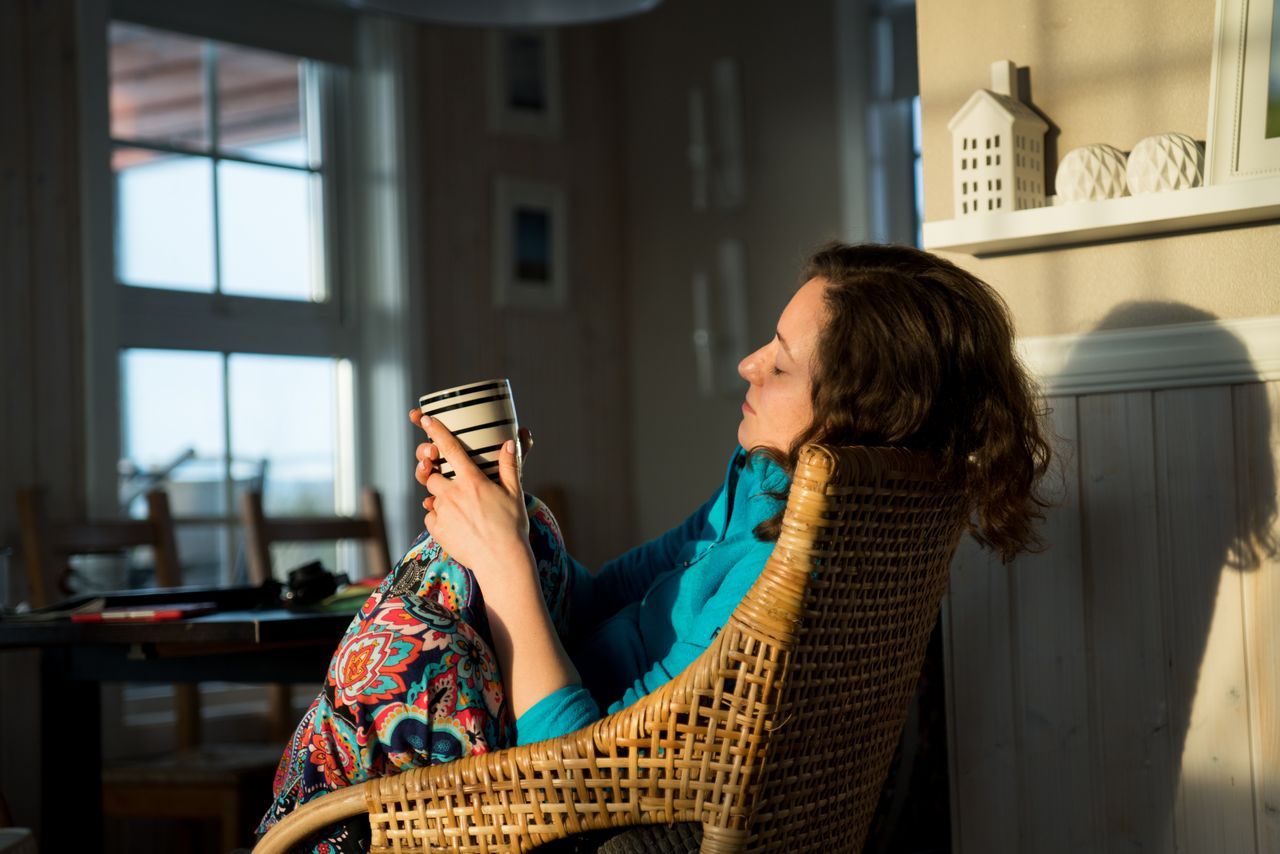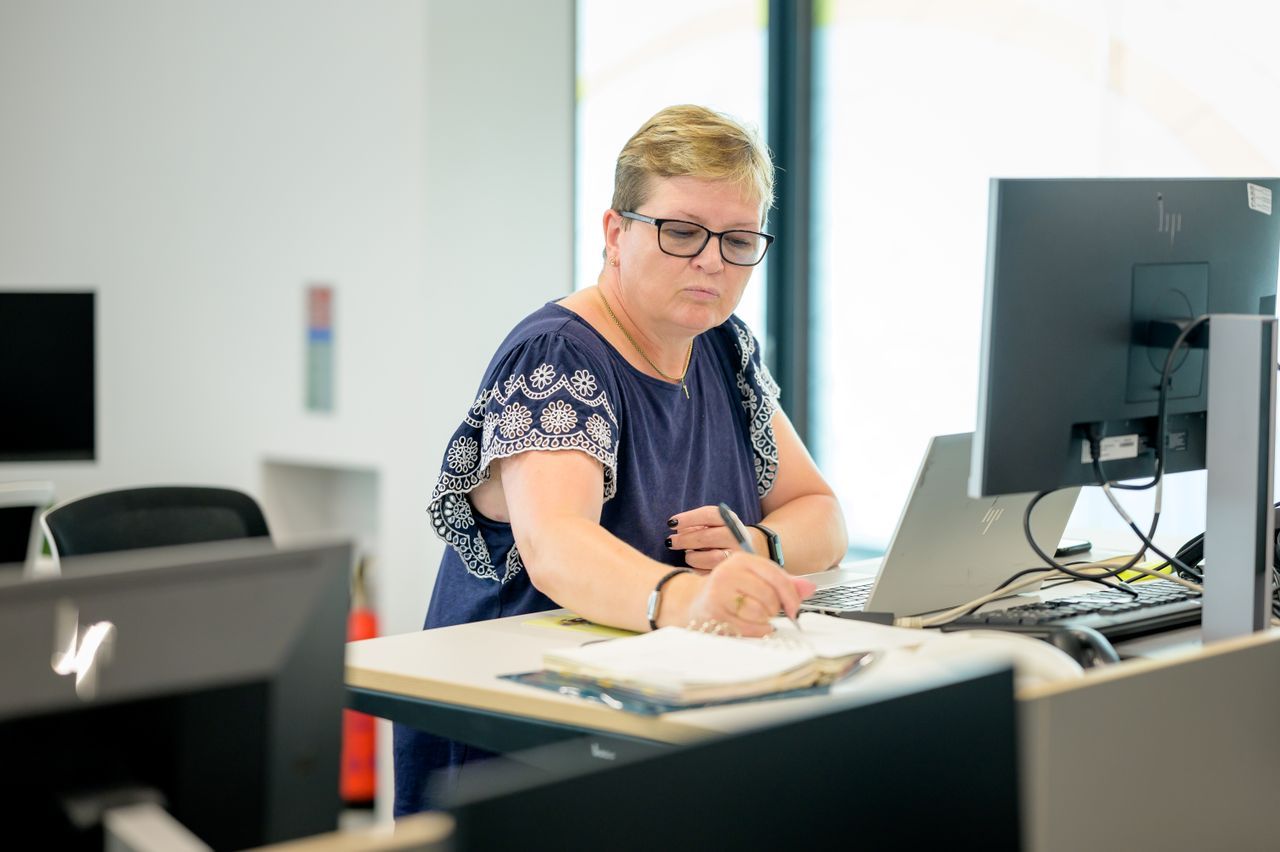
Mariam’s story is fictional. It brings together experiences that many women describe.
Mariam’s alarm goes off at 6 a.m., but she’s been awake since 4. In her head, she has already gone through the whole day. Drop the kids at school. Finish the report before her 10 a.m. meeting. Pick up her mother-in-law’s prescription. Find a costume for her daughter’s school event on Friday. Take the chicken out of the freezer.
At work, people see her as the one who has it together. At church, she’s the first to offer help with the youth dinner. Her house is clean when guests come, and her kids are doing well in school.
For the past few months, her chest has felt tight most afternoons. She went to her family doctor, worried it was her heart. The tests came back normal. She was relieved, and a little embarrassed.
At night, after everyone is asleep, she sits at the kitchen table answering emails and checking the school portal one more time. When her husband, Sami, finds her there, he says, “You worry too much. Just come to bed.” She knows he means well. She still feels alone.
She has thought about talking to someone. Then she thinks about what people would say if they found out, and she isn’t sure how she would even explain it. Nothing is wrong, exactly. Other women manage. Why can’t she?
If parts of her story sound like your life, this article is for you. It looks at why anxiety in women is so easy to miss, what keeps it going, how family, culture, work and marriage play a part, and what therapy can look like.
In short
- According to CAMH (the Centre for Addiction and Mental Health), anxiety disorders are the most common mental health problem in women.
- In many women, anxiety looks like being busy, organized and responsible, so it often goes unnoticed for years.
- Keeping track of everyone’s needs, guilt about saying no, family expectations and work pressure can all keep anxiety going.
- Anxiety affects marriages too. Individual and couples counselling can both help.
Why anxiety in women is so easy to miss
Most people picture anxiety as panic attacks, or as someone too nervous to leave the house. For many women, it looks more like Mariam: busy, capable and always one step ahead.
Anxiety is your body’s alarm system. Its job is to warn you about danger and get you ready to act. When the alarm goes off too often, or stays on for months, your mind keeps scanning for what could go wrong. Your body stays on alert too. That’s why anxiety can show up as a tight chest, a racing heart, stomach problems, headaches, sore shoulders or trouble sleeping.
Many women respond to that alarm by doing more. Checking the school portal again. Rereading an email three times before sending it. Making a backup plan, then a backup for the backup. Cleaning the house at midnight before guests arrive.
Each of these brings a little relief. So the next time the worry shows up, your mind reaches for the same thing. Over time, the checking and planning become part of the anxiety. The worry grows a little stronger, and it takes more effort to settle it each time.
From the outside, all of this looks like being organized. That’s why family, coworkers and often women themselves don’t recognize it as anxiety.
A few signs that are easy to miss:
- You can’t relax until every task is done, and there’s always one more task.
- You replay conversations for hours, wondering if you said the wrong thing.
- You snap at your kids or your husband over small things, then feel guilty all night.
- You wake up at 3 or 4 a.m. with your mind already going through the day.
- You’ve seen a doctor about physical symptoms, and the tests came back normal.
If several of these sound familiar, your family doctor can check for physical causes, and a therapist can help you understand what’s going on.
Anxiety often shows up young
According to CAMH, anxiety disorders are the most common mental health problem in women. Statistics Canada’s 2022 national survey found the highest rates among young women. That year, 11.9 percent of women aged 15 to 24 had generalized anxiety disorder, a condition where worry is hard to control and lasts for months. That is more than double the rate for all Canadians aged 15 and older (5.2 percent). Social phobia, a strong fear of being judged by others, affected 24.7 percent of young women, about one in four, compared to 7.1 percent overall.
The overall rate of generalized anxiety disorder in Canada has also doubled in ten years, from 2.6 percent in 2012 to 5.2 percent in 2022.
If you have a daughter in her teens or early twenties, these numbers are about her generation. Anxiety in young women can look a lot like it does in their mothers: working very hard to get everything right, worrying about what others think, trouble sleeping, stomach aches before school, or pulling away from friends and social plans. The survey doesn’t explain why the rates are so high. It does show that many young women are struggling, and that it’s worth asking your daughter how she’s really doing. Our article on how to support a teen who’s struggling with anxiety has ideas, and Cornerstone also offers counselling for children and youth.
Being the one who remembers everything
Some writers call this the “mental load.” It means all the planning, remembering and noticing it takes to keep a family running.
The tasks themselves are only part of it. The harder part is being the person who keeps track of them. Someone else may pick up the groceries, but you’re the one who noticed the milk was low, knew which brand the kids will drink, and remembered that your mother-in-law needs to watch her salt. Someone else may drive your son to soccer, but you signed him up, paid the fee and bought the shin pads.
Each of those things is a small item your mind is holding onto. Each one keeps a little of the alarm switched on, because if you forget it, it may not get done. That’s why many women feel worn out at the end of a day when they “didn’t really do much.” Their mind was working the whole time.
For Mariam, finding a costume for Friday is easy on its own. What wears her down is that it’s one of fifty things like it, and she’s the only one keeping track of all fifty.
Guilt and the habit of saying yes
Many women grew up learning that a good daughter, wife and mother puts everyone else first. That lesson goes deep. As an adult, saying no can feel selfish, even when you’re exhausted.
Guilt and anxiety tend to feed each other. Someone asks for your help. You feel a quick flash of worry: “If I say no, they’ll think I don’t care.” Saying yes makes that worry go away right away. Now you have one more thing to do, so tomorrow’s worry is bigger. The yes calmed today’s anxiety and added to tomorrow’s.
When the church asked Mariam to organize the youth dinner, she said yes before she checked her calendar. She spent the next two weeks feeling resentful, and then guilty for feeling resentful.
“They’ll think I don’t care” feels true in the moment. It’s still a guess about what someone else will think. A therapist can help you test that guess with one small no, and see what happens. For many women, the guilt gets smaller with practice. Our article on how to set healthy boundaries has more on this.
When family, culture and moving to Canada add to the pressure
Many of the women we see at Cornerstone are married, raising children and part of close families and church communities. Many come from Arabic-speaking and Middle Eastern families. For a lot of women, family is the best part of life. Family can also bring expectations that make anxiety harder to talk about.
Every family is different, and you may only recognize yourself in one or two of these.
Worrying about what people will say
In many families, how things look to others matters a great deal. In Arabic, people often call it kalam el nas, or “what people will say.” You might feel you can’t let anyone see you struggling, because it could reflect on your husband, your parents or your children. Seeing a therapist can feel like admitting something is wrong with the whole family. So you smile at church and at family gatherings, and fall apart when you’re alone.
Raising a family far from the people who would have helped
If you moved to Canada as an adult, you may be raising children without your mother, sisters or aunts nearby. Back home, they might have come to stay after the baby was born, cooked when you were sick, or taken the kids for an afternoon so you could rest.
Here, you may be doing all of it on your own. At the same time, you might be learning a new school system, working in a job below your training, and worrying about your parents getting older far away. A video call with your mother helps, but it can’t take the baby for an hour. You can read more in our article on anxiety in newcomers to Canada.
Trying to be the perfect wife, mother and daughter-in-law
In some families, there’s an unspoken picture of the perfect woman. The house is spotless when guests arrive. The food is homemade. The children behave well and get good marks. She helps at church, looks after her in-laws and never complains.
If your in-laws live with you, as Mariam’s mother-in-law does, that picture can feel like it’s being checked every day. A comment about the cooking or the children’s bedtime can stay with you for hours.
When you fall short of that picture, even a little, the guilt can be heavy. Many women don’t realize how much of their anxiety comes from trying to meet a standard no one could meet every day.
For women of faith, anxiety can bring one more worry: “If I trusted God more, I wouldn’t feel this way.” You might pray, fast and serve, and still feel anxious, then feel ashamed of that too. Many people with deep faith also live with anxiety. Getting help for your mind and body can go together with your faith.
When anxiety affects your marriage
Anxiety doesn’t stay inside one person. It shows up in a marriage too.
When you’re anxious, you might need to talk through the same worry many times, or ask your husband again and again whether things will be okay. You might need things done a certain way and get upset when they aren’t. Your husband may try to fix the problem quickly (“Just don’t think about it”), or go quiet because he doesn’t know what to say. To you, that can feel like he doesn’t care. To him, it can feel like nothing he does helps.
From there, a common cycle can start:
- You feel worried, so you reach out to him.
- He tries to calm you down quickly, or he pulls back.
- You feel brushed off, so you push harder, or you stop asking and do everything yourself.
- He feels criticized or shut out, so he pulls back further.
Both of you end up feeling lonely, and the anxiety grows.
That’s what happens at Mariam’s kitchen table. Sami wants her to rest. Mariam hears that her worries are silly. Both of them want the same thing, a calmer home, and they keep missing each other.
Couples counselling can help you both see the cycle and find a way out of it. A therapist helps each of you say what you need in a way the other person can hear. Your husband can learn what anxiety feels like from the inside and what kind of support helps. The two of you can work out how to share the mental load, so it isn’t all in your head. Emotionally focused therapy (EFT), one approach our therapists use with couples, is built around understanding this kind of cycle.
Some husbands feel uneasy about therapy. They may worry about sharing private family matters with a stranger, or worry that they’ll be blamed. Some women start with individual sessions and invite their husband to join later, once they feel ready. Other couples come together from the first session. Either way, the therapist’s job is to help both of you, without taking sides.
Working, running a business and still running the home
Many women work outside the home, then come back to a second shift: dinner, homework, laundry, bedtime and getting everything ready for tomorrow. Even in homes where husbands help a lot, women are often the ones who plan and remember.
If you work for someone else, you may worry about leaving early for a sick child or a meeting at school. At home, you may worry about the work you didn’t finish.
If you run your own business, the pressure can look different. There’s no one to cover for you when your child is sick, and the workday has no clear end. You might answer customer messages at the dinner table, do the bookkeeping after the kids are in bed, and worry about money when sales are slow. Some women run a business from home, so work and family happen in the same rooms all day. Others work in a family business with their husband or in-laws. A disagreement at work can come home with you, and a family problem can come to work with you.
Many women are also caring for a parent or in-law. That can mean driving them to appointments, keeping track of their medications, or calling family back home every day.
When you’re an employee or business owner, a mother, a wife and a caregiver all at once, there’s very little time left to rest. It makes sense that anxiety builds. If work is a big part of your stress, our article on workplace anxiety may help.
Anxiety during pregnancy and after having a baby
According to CAMH, perinatal mood and anxiety disorders affect between 10 and 20 percent of pregnant women and new mothers. “Perinatal” means during pregnancy and the first year after birth.
It can look like constant worry about the baby’s health, checking on the baby over and over, trouble sleeping even when the baby is asleep, or frightening thoughts that come suddenly and don’t feel like you.
Many women keep quiet about it. They worry they’ll be seen as a bad mother, or that family will tell them every new mother feels this way. Getting support during this time can help both you and your baby. CAMH notes that treating anxiety or depression during this time is very unlikely to harm the baby.
Anxiety in the years before menopause
Perimenopause is the stretch of years before menopause when your hormones start to change. According to Johns Hopkins Medicine, as estrogen and progesterone drop, levels of serotonin, a brain chemical linked to mood, can drop too. This can bring more anxiety, mood swings, poor sleep, a faster heartbeat and trouble focusing. Family members sometimes notice the change before you do.
If anxiety shows up for the first time in this stage of life, or gets much worse, it may help to see your family doctor as well as a therapist.
When anxiety turns into burnout
Keeping your body’s alarm switched on takes energy. For a while, many women run on that energy. They get more done, sleep less and keep going. Over months or years, the energy runs out.
Many women describe it happening in stages. At first, you feel wired: busy, on edge, always moving. Then you feel tired and wired at the same time, exhausted all day but unable to switch off at night. Later, you may feel empty. Things you used to enjoy start to feel like chores. You feel short-tempered, or numb. Small choices, like what to make for dinner, feel too big.
The World Health Organization uses the word “burnout” only for long-term stress at work. Many women describe the same kind of exhaustion after years of caring for children, a home and aging parents, whether or not they also have a job. Whatever name you use, it’s worth taking seriously.
Rest helps. A weekend away can help you feel better for a few days. When you come back to the same load, the same expectations and the same habit of saying yes, the exhaustion often returns. Lasting recovery usually means changing the load itself: what you take on, what you share and what you let go. Our page on stress and burnout explains more.
What therapy for anxiety can look like
Many women put off therapy because they aren’t sure what happens there. Here’s what it might look like for someone like Mariam. Everyone’s therapy is different, and you and your therapist decide together what to work on.
The first session. Mariam talks about what’s been happening: the 4 a.m. wake-ups, the tight chest, the late nights at the kitchen table. Her therapist asks about her sleep, her health, her work and her family, and what she has already tried. Mariam decides how much to share.
Understanding the cycle. Over the next few sessions, they look at how her worry works. Her therapist uses ideas from cognitive behavioural therapy (CBT), one of the most studied approaches for anxiety. Mariam starts to notice her worried thoughts and what she does to calm them. Then she tries a small experiment: checking the school portal once after dinner, and leaving it until morning. The first few nights, her worry goes up. Then it starts to settle on its own.
Sharing the load. Mariam writes down everything she keeps track of in a normal week. She brings the list to a joint session with Sami. He’s surprised by how long it is. They agree that he’ll take over two things completely, including remembering them.
Caring for her body. She learns slow breathing she can use at her desk when her chest tightens, and works on a bedtime routine that doesn’t include email.
Practising one no. Before saying yes to the next church request, she gives herself a day to think about it.
Some women want to bring their faith into this work, and Cornerstone offers Christian faith-integrated counselling for those who ask for it. Some women find it easier to talk in Arabic. Both are options, and both are your choice.
Mariam still has busy weeks. What’s different is that she can notice the alarm sooner, settle it more often, and share more of what she used to hold alone.
Worrying that people you know will find out
Many women hold back from therapy because they worry their story will reach people they know. The worry can be stronger in close communities, where people see each other at church, at school and at family events.
Every Cornerstone therapist is registered with the College of Registered Psychotherapists of Ontario (CRPO) and must follow Ontario’s privacy laws. What you share stays between you and your therapist, with a few exceptions required by law, such as serious safety concerns. Your therapist will explain these at your first session. If you’d feel more comfortable with a therapist from outside your community, or meeting online from home, you can ask for that.
How Cornerstone can help
At Cornerstone, we work with women and couples who are managing anxiety alongside busy, full lives. All of our therapists hold a master’s degree and are registered with CRPO. Our clinical team works under the guidance of a Clinical Director with doctoral-level training.
A few things that may make it easier to start:
- Individual counselling, and couples counselling if you’d like your husband to be part of it
- Evening appointments Monday to Thursday until 9 p.m., plus Saturday morning sessions
- Online sessions you can join from home, or from your parked car if that’s the most private place you have
- Therapists who speak Arabic
- Christian faith-integrated counselling for clients who want it
- A sliding scale based on income, for those who qualify
- A free 15-minute consultation with a therapist, so you can ask questions and find the right fit
Taking the next step
Mariam’s question, “Other women manage, so why can’t I?”, is one many women ask themselves. Often, the women they’re comparing themselves to are asking the same question.
If you’re looking after everyone else and have little left for yourself, talking with a therapist may help. You can learn more about anxiety therapy in Mississauga, read our article about the signs of anxiety people often miss, or call us at 905-214-7363 to book a free 15-minute consultation.
If you need help right away
If you’re having thoughts of harming yourself or your baby, or you don’t feel safe, call or text 9-8-8, the Suicide Crisis Helpline, any time of day or night. You can also call 911 or go to your nearest emergency department. In Peel, call the 24-hour crisis line at 905-278-9036. See local emergency contacts for more support.
Reviewed by
This article was reviewed by Karoline Boles, Registered Psychotherapist (Qualifying), Cornerstone Family Counselling Services. Karoline can help you understand your emotions, develop coping skills, and build real resilience. And because she’s bilingual in English and Arabic, she can connect with families from diverse cultural backgrounds in their preferred language.
Sources
- Statistics Canada. Mental disorders in Canada, 2022.
- Centre for Addiction and Mental Health (CAMH). Anxiety Disorders.
- Centre for Addiction and Mental Health (CAMH). Perinatal Mood and Anxiety Disorders.
- Johns Hopkins Medicine. Perimenopause and Anxiety.
- World Health Organization. Burn-out an “occupational phenomenon”: International Classification of Diseases.